Suicide Prevention: A Shared Responsibility
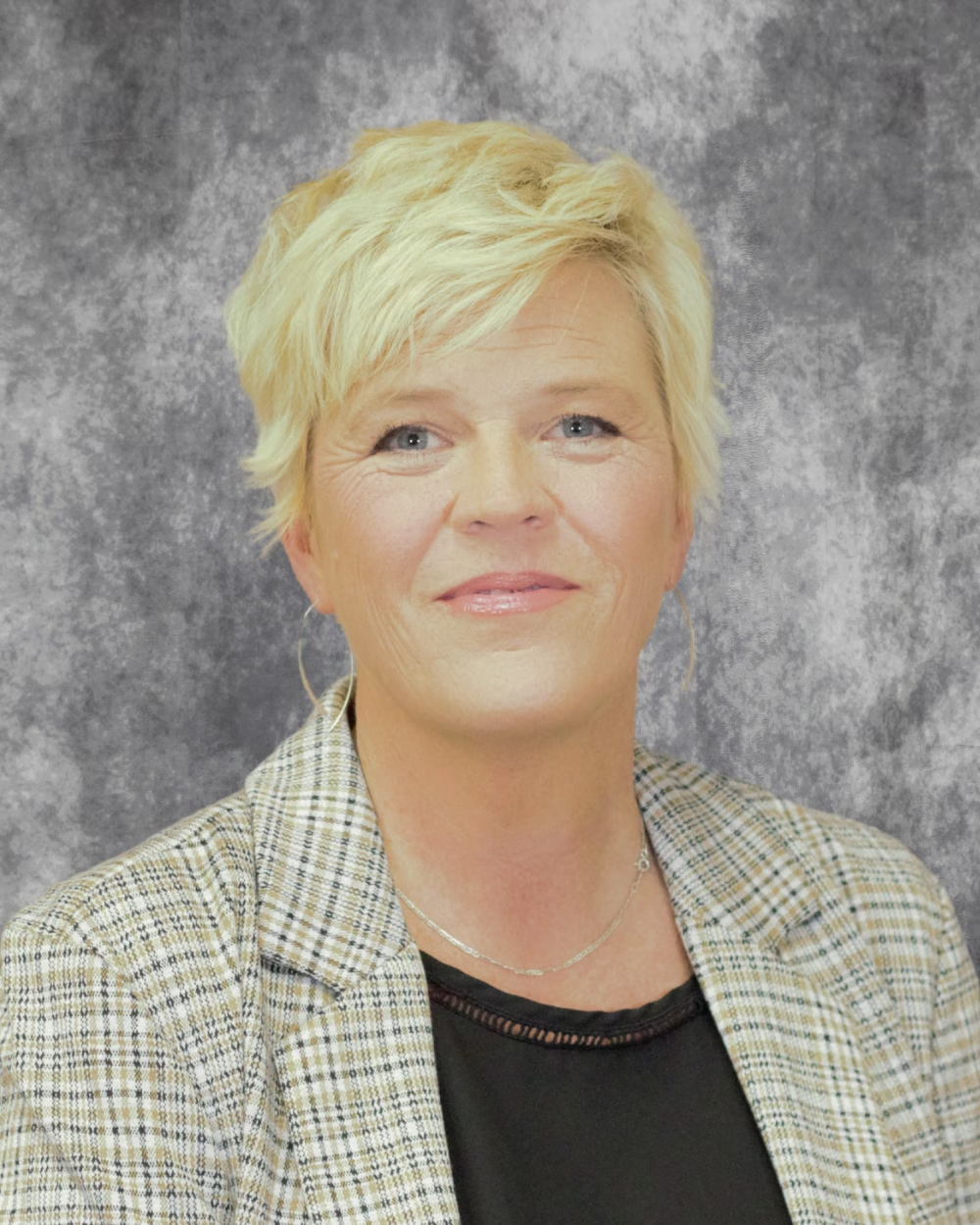
By Dottie Fuentes, Chief Clinical Officer, Northeastern Center
Suicide is a complex and heartbreaking issue that touches individuals, families, and entire communities. According to the Centers for Disease Control and Prevention, "Suicide is a significant cause of premature death because it is the second-leading cause of death among people aged 10 – 14, 15 – 24, and 25 – 34."
Prevention begins with awareness and compassion. Taking the time to listen without judgment, offering a word of encouragement, or reaching out when someone seems withdrawn can be lifesaving. Often, it is the small gestures of care that create the connection a person needs to choose hope over despair.
Equally important is challenging stigma. It is estimated that more than one in five U.S. adults live with a mental illness (59.3 million or 23.1% of the U.S. adult population), yet only 50.6% receive treatment, according to the National Institute of Mental Health.
By speaking openly about mental health, encouraging help-seeking, and supporting accessible resources in schools, workplaces, and neighborhoods, we build communities where people feel safe to reach out.
Though trained professionals play a vital role in suicide prevention, we need more. Per the National Center for Health Workforce Analysis, as of August 2024, more than one third (122 million) of the U.S. population lives in a Mental Health Professional Shortage Area.
Thankfully, each one of us has the power to make a difference. Suicide prevention is not only about recognizing warning signs – it is about creating communities rooted in hope, respect, and partnership. Together, we can foster resilience, ensure access to care, and remind one another that no one has to struggle alone.
If you or someone you know is in crisis, call or text 988 for immediate support. Northeastern Center's 24/7 Emergency Solutions team is also available at 1-800-790-0118, or you can walk into NEC Cares at 1752 Wesley Road, Auburn.